

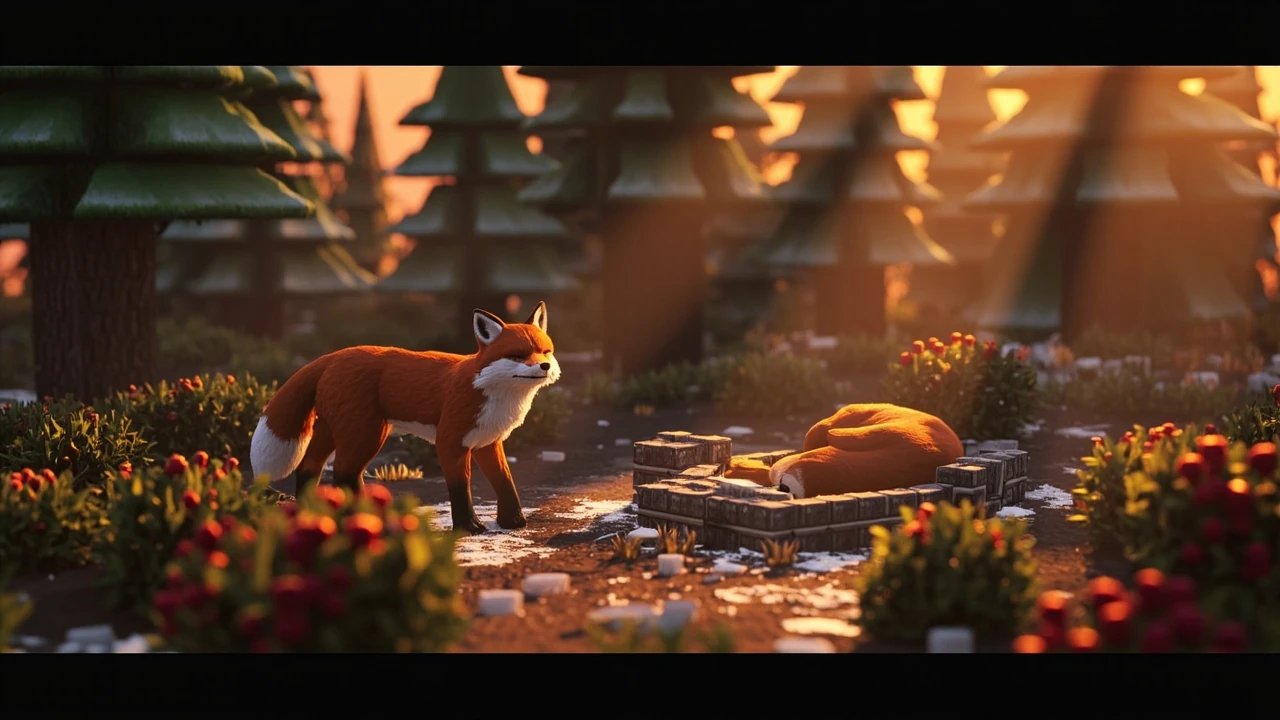
Minecraft fox: behavior, breeding, and tame mechanics
A red fox in a taiga grove is one of the more quietly interesting mobs to design around, because its routine actually rewards observation rather than combat. Foxes spawn in small packs, sleep through the day, hunt at night, and only become useful once a player has figured out the trust and breeding path. This guide walks through the mechanics that govern the minecraft fox in current Java and Bedrock releases, so the time spent in a grove biome turns into a stable tame line instead of a random encounter.
Most of what makes foxes feel unusual comes from a handful of specific rules: they are nocturnal, they are shy until trusted, they prefer sweet berries and glow berries, and they can pick up items they find. The official Fox entry on the Minecraft Fox wiki guide documents those behaviors in detail and is the most reliable player-facing reference for spawn biomes, breeding, and loot. The notes below expand those points with the kind of decisions a player has to make in the moment: where to look, how to build a pen, which items to feed, and what to expect from a trusted fox overnight.
Where foxes actually spawn
Foxes do not appear everywhere. They are tied to a small set of biomes, and recognizing those biomes is the first practical skill. Once you know what to look for, a pack of foxes is much easier to find than wandering randomly at night.
In current versions, foxes spawn in the following environments:
- Taiga, including its snowy variant, which produces the white arctic fox.
- Grove, the snowy mountain biome added in later updates, where foxes blend into the snow cover.
- Old-growth taiga and its snowy form, which behave like taiga for spawn purposes.
- Cherry grove biomes, where foxes appear among the petal-covered terrain.
Spawn rules in each case are similar: a pack consists of two to four foxes, and the biome determines coat color. Taiga, old-growth taiga, and cherry grove produce the standard red fox. Snowy taiga, snowy old-growth taiga, and grove biomes produce the white variant. If you want a specific color, travel to the matching biome rather than waiting for one to wander into your base.
Foxes also follow a height-based rule. They spawn above sea level on grass or snow blocks, which is why they tend to appear on the slopes of a taiga or the flatter plateaus of a grove. A player looking down from a hill will often spot a pack before the foxes notice, which is useful because foxes are skittish and will flee if you sprint toward them.
Pack sizes are small on purpose. A typical pack includes a few adults and, occasionally, a baby that was bred by another player on a multiplayer server. Because the pack is small, it is easy to count at a glance and decide whether to leave the pack alone, take one fox with a lead, or breed the whole group in a prepared pen. Players who want a steady line of foxes usually locate two or three packs in nearby biomes and breed across them to keep variants mixed.
One quirk worth knowing is that foxes do not respect the boundary of a biome in the way players expect. A pack can spawn on a taiga edge that borders a plains biome, and the foxes will wander into the plains at night while hunting. That wandering is the reason foxes occasionally appear near a village or a roadside chicken pen in a biome that does not actually spawn them. If you have ever lost chickens overnight to an unseen predator, the answer is sometimes a passing fox rather than the usual zombie swarm.
Daily cycle and what foxes actually do
The daily cycle is the most important part of fox behavior, because almost every useful interaction depends on the time of day. Foxes are coded as nocturnal, and that single tag changes how you approach them.
During the day, foxes look for a shaded spot and curl up to sleep. They often sleep under trees, inside leaf canopies, or beside blocks that cast a shadow at the player’s height. A sleeping fox will not flee, breed, or pick up items, so most breeding attempts have to wait for night. If you want to move a sleeping fox into a pen, you can carry it with a lead, push it with a boat, or build a wall around it while it is dozing and wait for it to wake up trapped.
At night, the same fox becomes active in several distinct ways:
- It wanders within a small home radius and patrols nearby terrain.
- It hunts small animals, including chickens, rabbits, and baby turtles.
- It enters villages, which is why chicken pens near a taiga are not as safe as they look.
- It picks up dropped items it walks over, including food, tools, and mob drops.
The item-pickup behavior is the mechanic most players miss. A fox will grab a dropped sweet berry, a piece of raw rabbit, or even a stick if the item lands in its path. Anything it is holding shows in its mouth, and the item is held until the fox decides to drop it, which usually happens near a berry bush. That connection between carrying an item and dropping it later is the basis for both the loot surprise and the breeding shortcut described below.
Foxes also use a small set of animations that signal mood. A fox that arches its back and puffs its tail is preparing to defend itself. A fox that sits and tilts its head is curious and is often about to pick up an item. A fox that sprints away with its tail low is fleeing. Reading those animations is not required to play, but it helps in the first hour when you are still figuring out why a fox either attacks your chicken or runs into a tree.
Sound is part of the cycle as well. Sleeping foxes are quiet, and the only sound a daytime player hears from a fox is the small crunch of paws on snow. At night, foxes use short high-pitched yips to communicate inside a pack, and a player crouched near a grove will hear those calls before spotting the animals. Listening for the call is a surprisingly reliable way to confirm a pack is nearby without exposing yourself to skeletons or phantoms in the dark.
Taming, trust, and what “tamed” actually means
Foxes are not tamed the way wolves or cats are. There is no collar, no hearts, and no permanent allegiance. Instead, the game uses a trust mechanic: a fox that has been bred by a player becomes loyal to that player specifically, and only that player’s actions will keep the loyalty going. If a different player hits the fox, trust is lost and the fox reverts to a wild state.
To trigger trust, you need a baby fox that was produced by breeding. The steps are simple but easy to get wrong the first time:
- Trap two adult foxes inside a small enclosed area at least two blocks high so they cannot jump out.
- Feed each adult either sweet berries or glow berries. Sweet berries come from taiga; glow berries come from lush caves.
- Wait for the adults to enter love mode and produce a baby fox. Foxes do not pair permanently, so the baby will need to be the focus of the next step.
- Stand near the baby and let it grow up. Once it matures, it is considered trusted to you and will not flee from your movement.
Trusted foxes are not aggressive by default, but they do defend their owner against a short list of hostile mobs. If you are attacked by a zombie, skeleton, or similar enemy, a trusted fox will move in and bite the attacker. That defense is helpful on early-game nights, although a fox cannot survive a direct fight with a creeper or a wither skeleton, so it is more of a deterrent than a tank.
One subtle but important rule: trust only applies to the player who bred the fox. Other players on a multiplayer server will still be treated as strangers, which means a trusted fox will still flee from them. If you run a server, this is worth explaining to other players so they do not interpret the fox’s flight as a bug.
Trust is also fragile in a specific way. A trusted fox does not need to be fed or walked, but it does need to remain near the player who bred it to keep that flag active. If the fox wanders too far, or if a different player logs in and chases it, the trust state can decay over time and the fox will start fleeing again. The simplest way to keep trust stable is to keep the fox in a pen near the breeder’s base, with a fence gate that only that player opens.
Breeding inputs and timing
Breeding is the moment where a quick visit to a taiga turns into a long project. The berries are not hard to find, but the patience requirement and the enclosure design catch most players out the first time.
The breeding mechanics are consistent across current Java and Bedrock editions:
- Breeding item: sweet berries or glow berries, one per fox, fed by hand.
- Cooldown: about five minutes before the same fox can breed again, even if you have a stack of berries.
- Trust inheritance: a baby born to two trusted parents is automatically trusted to the player who bred them.
- Variant inheritance: a baby inherits a variant from one of the parents, so a red and a white fox can produce either color.
Because of the cooldown, building a small farm with a handful of foxes is faster than trying to breed two animals once and expecting the pair to keep producing. A working setup usually has four to six adult foxes in adjacent pens, each with a steady supply of berries, and a central enclosure where babies are raised to adulthood. The exact pen shape does not matter as long as it is at least two blocks high and shaded enough that the foxes settle in.
Glow berries deserve a separate note. They are the cave-friendly alternative to sweet berries and are a useful fallback if your base is nowhere near a taiga. Lush caves have vines and glow berries, and a small underground farm of berry vines can feed a fox pen indefinitely. If you are designing a base in a cave or a mountain biome, glow berries are the breeding input that keeps the fox line going without long surface trips.
Feeding should be done in a specific order to avoid wasting berries. The first adult has to be fed, the second adult has to be fed within the same session, and the player has to stay close enough that the breeding animation triggers. If the player walks away between feeds, the second adult may lose the breeding state and require another berry. After the baby spawns, the player should not move more than a few blocks away until the baby is old enough to stay in the pen without squeezing through gaps. That window is short, and it is the most common moment for a baby to vanish into a cave.
Items foxes pick up and how to use that mechanic
The item-carrying behavior is unusual for a passive mob, and it is worth treating as its own system rather than a side detail. A fox that walks over an item will pick it up if the item is on the ground and the fox is not already holding something. The fox then carries the item until it drops it.
The trigger for the drop is the part most players miss. According to the verified fox guide, a fox will drop whatever item it is holding when there are three or four berry bushes within a sixteen-block radius. The implication is practical: a player can plant a small grove of sweet berry bushes near a fox pen, and the next morning the pen will contain whatever item the fox picked up the night before. Used deliberately, this turns a pen of foxes into a slow trickle of mob drops, food, and occasionally tools if something was dropped nearby.
A more controlled approach looks like this:
- Place three to four sweet berry bushes inside a small enclosure with a single trusted fox.
- Drop a specific item, for example a feather, a piece of leather, or an arrow, in the fox’s path before night.
- Sleep through the night so the fox can pick up the item and start wandering.
- Return in the morning and look for the dropped item near the berry bushes.
This is not a fast farm, and it is not deterministic. A fox may pick up the wrong item, drop it in an unexpected spot, or simply not find the item before morning. It is, however, a low-cost way to recycle drops that you would otherwise leave on the ground, and it fits the spirit of foxes as opportunistic scavengers.
Item priority is worth knowing if you want to filter the drops. Foxes have a small internal list of preferred items, and they will grab the first eligible item they cross. If you want a fox to carry feathers for arrow production, drop the feathers last and clear other items out of the pen before night. The fox will pick up the feather, hold it through the night, and drop it near the berry bushes in the morning. Used carefully, the same trick can be applied to bone, leather, rabbit hide, or any other small drop that you would otherwise leave on the ground.
There is a hard limit on what a fox can hold. A fox holds one item at a time, and the held item is treated as a slot in its inventory. If the player tries to give the fox a second item, the fox will not pick it up. This matters for the player who wants the fox to act as a courier. The fox will only carry the first eligible item it sees, and the rest stay on the ground where other mobs can grab them.
Combat and defense: how useful is a trusted fox
Trusted foxes are defensive, not offensive. They do not roam at your side like a wolf pack, and they do not follow you through portals. They are best understood as a small deterrent that lives near your base and reacts to nearby threats.
The combat profile is narrow. A trusted fox will attack zombies, skeletons, spiders, and similar hostile mobs that target you. It will not engage a creeper, an enderman, or any mob that has not targeted you first, which means a fox is not a substitute for a wall or a fence. It is also easy to kill: foxes have low health and can be taken out in a couple of hits by a hostile mob or a fall. The defensive role is therefore small, and you should not build a base defense around a few trusted foxes.
What foxes are useful for, in practice, is reducing the impact of small raids. A zombie that gets through a gate will often be intercepted by a trusted fox, buying the few seconds you need to close the door or finish it off. In multiplayer, that small delay is enough to prevent a single zombie from spreading into a chain of spawns. In single-player, it is mostly an emotional reward, which is fine; fox farms exist because they are charming, not because they are optimal.
Falls are a separate hazard. Foxes will leap over fences and short walls, and a misjudged jump from a hill can kill a fox outright. If you keep foxes in a pen near a cliff, the walls need to be solid and at least two blocks high, and any ledges nearby should be filled in or fenced off.
There is one more combat detail that players often miss. A trusted fox will only defend the player it trusts. If another player on the same server is attacked, the fox will not help them. That is consistent with the trust mechanic, but it surprises players who expect the fox to act like a tamed wolf. In a small server with two or three friends, the practical answer is to give each friend their own pen and their own breeding pair, so that every base has at least one trusted fox tied to the player who lives there.
Variants, baby foxes, and what to expect from each
Foxes come in two main variants, and the difference is more than cosmetic. The mechanics are the same, but the visual and the spawning context change how you plan around them.
| Variant | Where it spawns | Coat | Player note |
|---|---|---|---|
| Red fox | Taiga, old-growth taiga, cherry grove | Orange-red with white underbelly and tail tip | Easier to spot in snowy biomes; standard breeding input is sweet berries. |
| Snow (arctic) fox | Snowy taiga, snowy old-growth taiga, grove | White with pale grey markings | Harder to see against snow; useful for camouflage builds. |
Baby foxes share the same variant as their parents but have a much smaller hitbox and a much higher tendency to wander. The hitbox issue is significant: a baby fox can fit through a one-block gap, which means a pen designed for adults is not automatically safe for babies. If you intend to raise babies to adulthood, you should use slabs, fences, or walls that have no one-block opening until the babies grow into adults.
There is no separate “baby” variant in the code, so a baby does not need its own breeding item. You simply wait for it to age. The growth time is short, on the order of twenty minutes of real time, so a player who breeds two adults in the evening can expect a small fox by the next play session.
Variant breeding has a few useful patterns. Red plus red produces a red baby. White plus white produces a white baby. Red plus white produces either color, with the choice driven by the game’s random selection. That means a player who wants a stable white line has to keep white parents together and feed them berries at the same time, because a red parent will sometimes win the random draw. Players who do not care about color can mix freely and accept whatever the game returns.
Building a fox pen that actually works
Most failed fox pens fail for the same three reasons: the walls are too short, the pen is too dark, or the floor has openings that let babies escape. A working pen avoids all three and keeps berries stocked.
Below is a minimal design that handles both red and snow variants, supports breeding, and does not require rare blocks.
| Component | Material | Size | Reason |
|---|---|---|---|
| Outer wall | Cobblestone, planks, or any solid block | At least 2 blocks high | Stops adults from jumping out. |
| Top trim | Slabs, fences, or hedges | Continuous ring | Discourages leaping and gives the pen a finished look. |
| Floor | Solid block, no gaps | Whole pen | Prevents babies from squeezing through and falling into caves. |
| Berry zone | 3-4 sweet or glow berry bushes | Within 16 blocks of the pen | Triggers the item-drop behavior. |
| Shade | Leaves or a roof | Daytime cover | Encourages foxes to sleep in the pen, which is required before breeding. |
| Lead point | Fence post or fence gate | One side | Lets you move adults to a breeding cell without breaking the pen. |
The berry zone is the detail most guides skip, but it is what makes the pen functional rather than purely decorative. A pen without berry bushes will still hold foxes, but the foxes will not drop the items they pick up, which removes the only part of the loop that produces a tangible reward beyond the company.
Shade deserves a closer look. Foxes only sleep where they consider the area dark enough, and a pen that is fully exposed to the sky will sometimes keep the animals wandering instead of curling up. A few leaf blocks over part of the pen, or a slab roof at the top of the wall, is usually enough. Players who build the pen inside a small cave or under a canopy rarely have to think about this, but players who build on an open hillside should plan the shade before the walls.
Lighting is the other detail that catches people out. Foxes are passive and do not require light, but torches and lanterns near the pen make it easier for the player to manage berries and to spot a baby that has wandered into a corner. There is no spawn-proofing concern, since foxes do not spawn inside the pen, but a torch at the entrance is a small quality-of-life addition that pays off in long sessions.
Version differences between Java and Bedrock
Foxes are one of the more consistent mobs across editions, but a few small differences are worth flagging if you switch between a Java server and a Bedrock realm.
| Mechanic | Java | Bedrock | Player impact |
|---|---|---|---|
| Breeding item | Sweet berries, glow berries | Sweet berries, glow berries | Same inputs in both editions. |
| Trust inheritance | Trusted to breeder | Trusted to breeder | No change across editions. |
| Item pickup | Picks up any item on the ground | Picks up any item on the ground | Same behavior. |
| Biome spawn list | Taiga, snowy taiga, grove, cherry grove | Taiga, snowy taiga, grove, cherry grove | Aligned in current versions. |
| Drop radius for held items | Three or four berry bushes within sixteen blocks | Three or four berry bushes within sixteen blocks | Same radius. |
Where players do see differences is in unrelated features that affect the pen: water flow, leaf decay, and the way boats interact with foxes. Bedrock handles boat entry slightly differently, which can matter if you intend to transport foxes by boat rather than by lead. If you are building a shared farm across editions, test the transport method on a small world first, since a fox that escapes during transport will revert to wild behavior.
One subtle difference shows up in cross-play servers. On a Java server hosting Bedrock clients, the fox’s animation timing is driven by the server, which means a Bedrock player may see the fox sit for a slightly different duration than a Java player would in a single-player world. This rarely matters for breeding, but it can explain why a player thinks the fox is ignoring a berry when the animation is just a fraction slower than expected.
Redstone interaction is also worth a note. Foxes do not trigger pressure plates, tripwires, or daylight detectors in either edition. That makes them a clean choice for an entrance system where you want a mob to cross a pressure plate without setting off the alarm. Players who build iron farms nearby can sometimes route a fox pen through a similar entrance pattern, and the fox will pass without triggering the farm’s detection logic.
Common mistakes when working with foxes
Most fox frustrations come from a short list of recurring mistakes. Going through them once is faster than learning them by accident in survival.
- Feeding the wrong item. Foxes only accept sweet berries and glow berries for breeding. Other berries, apples, or meat do not trigger love mode.
- Leaving a one-block gap. A baby fox will slip through it, fall into a cave, and despawn before you notice.
- Trusting the wrong player. In multiplayer, a different player attacking a trusted fox resets its loyalty, even if you are the original breeder.
- Expecting fox defense to scale. A trusted fox is a deterrent, not a wall. Build real defenses and treat the fox as a bonus.
- Forgetting the berry radius. Without three or four berry bushes nearby, the item-drop loop never fires and the pen feels pointless.
Most of these are quick fixes once spotted. The trust reset in particular is easy to miss in multiplayer until a friend complains that “your” fox is running from them.
A few more mistakes come up often enough to mention. Players sometimes try to use a name tag to “tame” a wild fox, which does not work. A name tag prevents despawning, but it does not grant trust, and the fox will still flee at full speed. Players also try to use a lead to drag a fox into a boat, which works, but the lead is consumed if the fox is killed while attached, so it is worth untying the lead before any fight. Finally, players sometimes breed a fox in a pen next to a chicken coop and lose chickens the next night, because the fox’s hunting behavior does not switch off after trust.
How foxes fit into a broader base design
Foxes are not a core part of a survival base, and the game does not penalize you for ignoring them. They are, however, a flexible addition that pairs well with a few specific builds.
- A taiga cabin: a small house in a taiga biome benefits from a fox pen nearby for both ambience and a slow trickle of item drops.
- A village defense: trusted foxes reduce the impact of small zombie raids on a village chicken pen, which is a common weak point.
- An underground farm: a glow berry farm in a lush cave can feed a fox pen in a connected cavern, useful for players who prefer underground bases.
- A cosmetic build: white foxes in particular read well against snow builds and offer a quiet visual accent.
None of these are required, and a player who only wants the loot and the defense can keep a small two-fox pen next to a chicken coop and call it done. The larger setups only make sense if the player enjoys watching the pen more than the items it produces.
Foxes also work as a teaching mob for new players on a server. The breeding loop is simple enough to learn in an evening, the trust mechanic introduces the idea of player-specific mob states, and the item-drop trick rewards observation. Servers that run a fox pen as a community project usually see new players pick up the basics of mob management faster than servers that focus on combat-heavy farms.
For players who like roleplay or building, foxes are a way to add character to a base without changing the survival loop. A snow base with a small white fox pen, a spruce cabin with a red fox by the door, or a cave entrance guarded by a pair of glow-berry-fed foxes all add a small narrative layer that other passive mobs do not. The mob is balanced around a low impact, which is exactly the right level for a build accent.
What the mechanics do not allow
A few things are tempting to assume and worth ruling out clearly. Foxes cannot be tamed with a bone, and they do not respond to raw fish, raw beef, or any standard food item. They cannot be equipped with armor, and they cannot ride in minecarts. They do not follow you through a nether portal, and they will despawn if left far from a player for long enough. A fox that wanders into the wrong biome and gets stuck in a tree will eventually despawn, and any items it was carrying are lost with it.
These limits are not bugs. They are part of how foxes are designed: a passive mob that adds character and a small mechanical layer, without becoming a workhorse. Players who try to turn foxes into a primary farm or a transport system will keep running into the same wall, because the underlying systems were never built to support that role.
The same limits apply to breeding. There is no way to force a specific variant beyond the random draw, no way to breed a fox with another mob, and no way to produce a fox with a special tag or effect. A fox that has been named with a name tag will not despawn, but the name tag does not change the trust state or the breeding cooldown. Players who want a fox with a specific name should apply the name tag to a baby, because renaming an adult does not always stick if the fox is in a wandering state.
Quick checklist for a first fox pen
- Find a taiga, snowy taiga, grove, or cherry grove biome.
- Trap two adult foxes in a pen at least two blocks high with no gaps.
- Plant three or four sweet berry or glow berry bushes within sixteen blocks.
- Feed each adult once and wait for a baby.
- Stay near the baby until it grows up to lock in trust.
- Sleep through a night with a small drop nearby to test the item-loop.
- Expand the pen or add more adults only after the first cycle works.
Following that order avoids most of the common failures and produces a working fox line in a single in-game day and night. From there, scaling is just a matter of more pens and a steady supply of berries.
Once the first cycle is stable, the next decisions are about scale. Players who want more drops add more adults, not more berries, because the radius is shared across the pen. Players who want more variants add a second pen in a different biome and breed across them. Players who want a quieter base keep the original two-fox setup and treat the daily item as a small surprise rather than a production target.
Frequently asked questions
What biomes do foxes spawn in?
Foxes spawn in taiga, old-growth taiga, snowy taiga, snowy old-growth taiga, grove, and cherry grove biomes. The snowy variants produce white foxes, and the other biomes produce red foxes. They spawn in packs of two to four above sea level on grass or snow blocks.
How do you tame a fox in Minecraft?
Foxes are not tamed in the traditional sense. You breed two adult foxes using sweet berries or glow berries, then stay near the baby until it grows up. A baby born from this process is trusted to the player who bred it, and that trust is what allows the fox to defend you and to stay near you without fleeing.
What do foxes eat in Minecraft?
For breeding, foxes accept sweet berries from taiga biomes and glow berries from lush caves. Outside of breeding, foxes hunt small passive mobs such as chickens and rabbits at night, but those kills are not a way to feed or tame them.
Can foxes hold items, and why does it matter?
Yes. A fox will pick up any item on the ground while wandering at night and hold it in its mouth. When the fox is near three or four berry bushes within a sixteen-block radius, it drops the item. This is the basis for the item-loop trick where a fox pen produces small drops overnight.
Do foxes defend players from mobs?
Trusted foxes attack hostile mobs that target the player who bred them. They will not engage mobs that have not targeted you, and they cannot survive fights with creepers, wither skeletons, or groups of mobs. They are a deterrent, not a defense system.
How do you transport a fox safely?
The simplest method is a lead, attached and then used to walk the fox into a boat or a pen. A boat is reliable in both Java and Bedrock, although Bedrock’s boat entry is slightly different. Always seal the destination pen before releasing the fox from the lead, and avoid transporting adults through open terrain where they can be hit by a skeleton.
What is the difference between red and snow foxes?
The difference is cosmetic and tied to spawn biome. Red foxes appear in taiga, old-growth taiga, and cherry grove. Snow foxes appear in snowy taiga, snowy old-growth taiga, and grove biomes. Both variants share the same behavior, breeding, and trust mechanics, and they can be cross-bred to produce either color.
Do foxes despawn in Minecraft?
Foxes can despawn if they are left far from a player for long enough, just like most passive mobs. A fox that is in a pen near your base, or that has been named with a name tag, will not despawn. Keeping a fox line in a sealed pen is the standard way to make sure the animals stay put.
Can you breed foxes with other animals?
No. Foxes can only breed with other foxes, and only when fed sweet berries or glow berries. They cannot be cross-bred with wolves, cats, or any other mob, and there is no hybrid mob in the game.
Are foxes useful in early game or only late game?
Foxes are most useful as a mid-game addition, once you have a stable base, a food supply, and a source of berries. In early game, the time to find a taiga, build a pen, and stock berries is rarely worth the small item drops. In late game, a fox pen is more of a quality-of-life addition than a core system, and it is best treated as such.

Leave a Reply